

KCOI is the main contractor for the development of a major hybrid power project in the Mangystau region, which in addition to the recip based power plant, will comprise a 77 MW wind power plant and a 50 MW solar power plant. When completed, the project will supply electrical power to oil and gas facilities in the region. The fast-starting Wärtsilä engines will provide the necessary secure and stable supply needed to compensate for the intrinsic fluctuation of electricity generation from renewable sources.
The piston based power plant is “essential to enable a stable and reliable supply of electricity, and the Wärtsilä engines will efficiently regulate the frequency and voltage to ensure this reliability is achieved,” said Mirko Borghesi, CEO of KCOI.
Delivery of the Wärtsilä equipment is scheduled for the end of 2025, and the power plant is expected to be fully operational by mid-2026.
To achieve “widescale integration of power from renewable sources, grid balancing capabilities are necessary, and the Wärtsilä engines are ideally suited to provide this,” commented Kenneth Engblom, Vice President, Africa and Europe at Wärtsilä Energy.
…and for balancing in Finland
Wärtsilä and Tornion Voima, subsidiary of EPV Energy, are building a new 43 MW piston based power plant that will be Finland’s “first to provide balancing capacity to the power system upon completion.” With it, Tornion Voima “will be able to guarantee electricity production during various disturbances and varying weather conditions,” says Wärtsilä.
Finland is already one of the world’s leading countries in terms of using renewable energy: its share of total energy consumption is over 40%, and the goal is to increase this share to 50% in the course of the 2020s, with wind and solar enjoying particularly rapid growth.
The availability of wind and solar power is inherently variable and maintaining high power supply reliability even during cloudy and low-wind weather requires flexible and reliable electricity production capacity. For this, a modern piston based power plant is the best option, argues Wärtsilä’s Kenneth Engblom: “It can be started quickly, only when needed and only for as long as necessary.” In addition, piston based power generation engine “has the best average efficiency in these types of operating conditions,” he notes.
According to the Finnish energy system modelling published by Wärtsilä in April 2024, the introduction of flexible and reliable electricity production capacity would not only increase the system’s reliability but also affect the development of electricity prices. The model suggests that Finnish electricity users could save up to 1.3 billion euros per year if such capacity were increased by 2 GW by 2030.
At the new Tornio power plant, natural gas will be used as the main fuel in the initial phase of production. Only a small amount is needed for the balancing of electricity production and existing regional gas infrastructure will be utilised. A transition to sustainable fuels is envisaged later on. Wärtsilä notes that its engines are already capable of running on sustainable fuels and will do so as soon as they become widely available.
Construction work on the power plant, located within area of Outokumpu’s Tornio steelworks (Röyttä port), will begin this autumn. The power plant is scheduled to be commissioned in February 2026, and the final construction work will be concluded later that spring. Wärtsilä will be responsible for the construction from spring 2025 until the completion of the power plant.
Bergen demonstrates 100% hydrogen
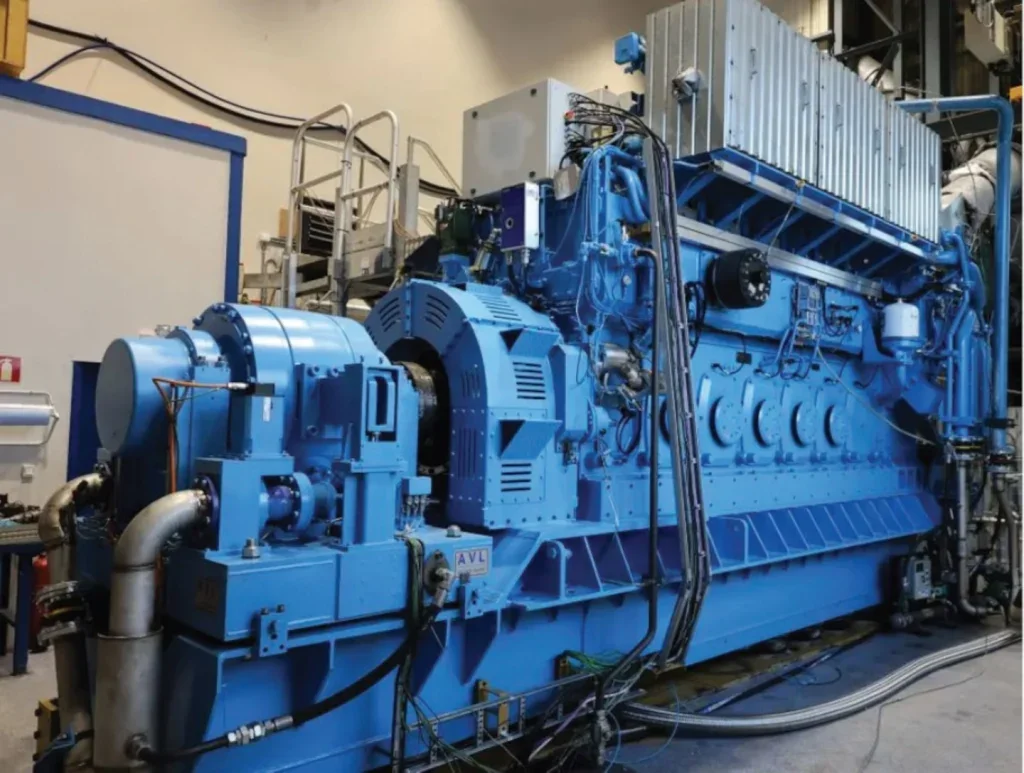
In October 2023 Tony Langley, chairman of Langley Holdings, owner of Bergen Engines, challenged the Norway based engine maker to demonstrate a Bergen medium-speed engine running 100% on pure hydrogen – by the end of 2024.
A Bergen gas engine had already operated successfully at full load on up to 30% hydrogen blended with natural gas. This was proven on an industrial scale application at a Bergen customer site in Spain. Significantly, it was achieved with only minor modification to the engine.
Following that success, infrastructure was installed to safely handle greater volumes of hydrogen at Bergen’s Hordvikneset engine laboratory and tests to increase the proportion of hydrogen still further began.
In December 2024 it was announced that 100% firing of a Bergen engine on hydrogen had been achieved.
Currently the cost of green hydrogen is several times that of oil and gas, Bergen observes, but this is set to change as the scale of green hydrogen production increases and, Bergen notes, “it has been estimated that the cost could begin to rival oil and gas as early as 2030.”
Power to Peru
Another recent development reported by Bergen Engines was the award of a contract by the Peruvian utility Promigas to supply 22 MWe of power via 2 x B36:45V20 gas engines fitted with Marelli Motori generators, contributing to the alleviation of “energy poverty” in the Piura region, the company says.
The power plant, scheduled to commence operation in the first half of 2026, is strategically located near a Promigas natural gas distribution pipeline, operated by its subsidiary Quavii (Gasnorp).
Bergen says the Piura project builds on its growing presence in Latin America, representing the second major project in Peru in 2024.
The project is “backed by our recent strategic investment in a new service centre in Mexico to support all LATAM projects,” said Aldrich Richter, Managing Director of Bergen Engines, LATAM.
Supporting Ukraine
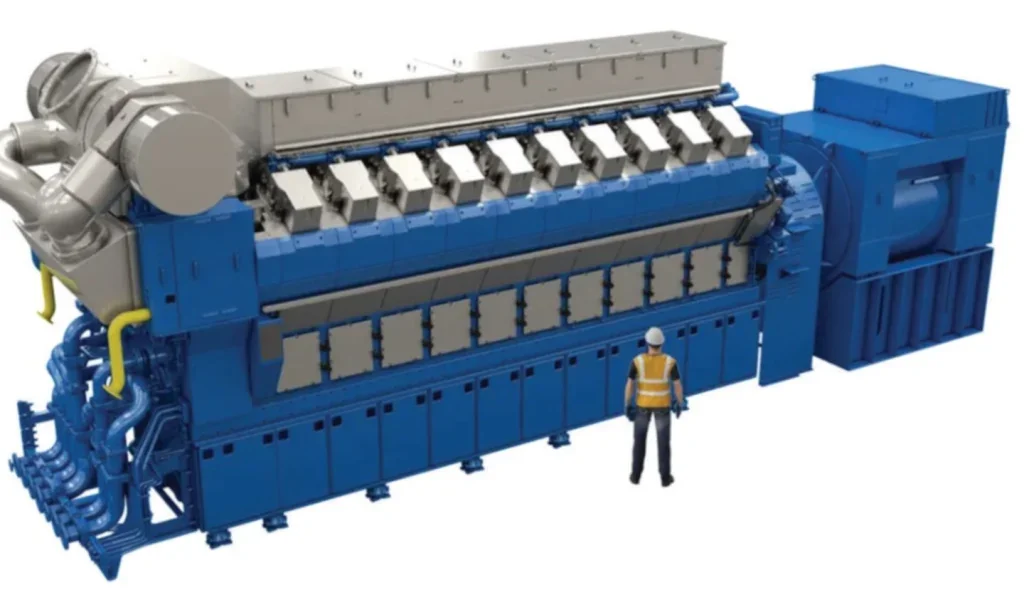
Bergen Engines also recently announced a significant project to supply eight Bergen B35:40V20 gas engines to Ukraine’s national grid. Facilitated by the United Nations Development Programme (UNDP) and funded by the Norwegian government through the Nansen Programme, this initiative will strengthen Ukraine’s energy infrastructure.
This article first appeared in Modern Power Systems magazine.


