

THE BLACKOUTS THAT AFFECTED the Iberian Peninsula in May this year should be a wakeup call – not just for Spain and Portugal – but for policymakers all over the world, Malcolm Turnbull, President of the International Hydropower Association warns.
“When I was Prime Minister of Australia,” Turnbull said, “it was the fear of blackouts and brownouts that drove me to champion the Snowy 2.0 pumped storage hydropower project. Australia was undergoing a rapid influx of solar generation. That was a good thing – but it brought new vulnerabilities. I realised that unless we invested heavily in storage and grid flexibility, the stability of our energy system – and the lives of millions of Australians –would be at risk.”
Although the immediate causes of the Iberian blackouts may differ from what Australia faced, Turnbull says there are two fundamental truths which remain the same:
- Energy security must be thought of at the level of the grid, not just individual sources of generation.
- Failing to do so has real, tangible consequences for citizens’ lives.
Governments and regulators need to rethink their approach because energy storage can no longer be “the ignored crisis within the crisis”, he added.
Although batteries are often presented as the solution because they are cheap, easy and quick to install, Turnbull believes relying on them alone for long duration storage is “a red herring”. They cannot feasibly or affordably provide the level of multi-hour, multi-day energy backup needed to keep entire grids stable at scale, he says.
Pumped storage hydropower, however, is a different story. It is a proven, robust technology with more than a century of success behind it and offers massive potential for future growth.
China and India have understood this and are building more than 200GW of new pumped storage capacity to back up their enormous investments in solar and wind. Europe, unfortunately, is coming late to the party, Turnbull warns. Although Spain and Portugal are European leaders on pumped storage, ambition is falling short of need. “More investment, faster permitting, and stronger integration of hydropower into national energy strategies are essential if Europe is to secure a stable, resilient energy future,” IHA’s President states.
“The recent blackouts in Iberia remind us that no energy transition can succeed if it sacrifices reliability for speed or ideology. Clean energy without grid security is a false promise. Tellingly, it was the regions with the highest levels of hydropower capacity that were among the first to restore electricity – highlighting the value of fast-ramping, dispatchable generation in times of crisis. Hydropower proved its worth not just as a clean energy source, but as a backbone of resilience when the grid was under stress.
Australian focus
Pumped storage is a major focus in Australia’s clean energy conversation. Penny Sharpe, Minister for Energy of New South Wales, recently underscored its vital when delivering the closing remarks at Pumped Storage: Powering Australia’s Energy Future, a landmark series of discussions that convened energy leaders in Brisbane and Sydney, the.
“Pumped storage hydropower plays a crucial role in our energy mix… We are determined to power households and industries across the state, and the best way to do that is by backing wind and solar with long-duration storage like pumped storage. This is how we deliver the reliable, sustainable electricity that people expect – but we have to get it right.”
The high-level forums, co-hosted by GHD and the IHA, brought together policymakers, industry leaders, and investors to drive momentum behind long duration energy storage. Discussions focused on the urgent need to scale up pumped storage as a cornerstone of Australia’s clean energy transition.
Helen Barbour-Bourne, GHD’s National Sector Lead for Hydropower, said: “Despite some hurdles, there’s a vast opportunity for pumped hydro to support our renewable energy future ahead of the hard deadline of coal power station closures. The private sector, backed by government policies, is stepping up, though financing remains a challenge. Together with the IHA, we brought together industry leaders to unlock pumped hydro’s potential for Australia.”
“Pumped hydro will be a critical part of the future energy technology mix, providing the firming capacity and flexibility to manage fluctuations in demand and keep power supply reliable,” says Tammy Chu, Interim Executive General Manager, Construction, Hydro Tasmania and IHA Vice-Chair. “The synergies between variable renewable energy generation and pumped storage must be recognised and valued to support the development of efficient and reliable electricity grids, in Australia and internationally.”
Kieran Cusack, Chief Executive Officer at Queensland Hydro believes pumped storage is “unquestionably” the right technology to support Queensland’s clean energy transition.
“Long duration pumped hydro can provide reliable renewable energy that can power homes and businesses all across Queensland, while at the same time providing crucial energy storage and stability for our future electricity needs. Our proposed Borumba Project is both the right technology at the right location,” he said. “Hearing the discussions with industry and the International Hydropower Association on the support for the potential of pumped hydro and the role it can play in the future throughout Australia and globally highlighted there is a growing understanding of how pumped hydro energy storage is needed in the mix to play an important role during the clean energy transition.”
Ambitions
AGL recently announced the acquisition of 100% ownership of two pumped hydro energy storage projects held by Upper Hunter Hydro Top Trust and its trustee (UHH). On current designs, the projects at Glenbawn and Glennies Creek plan to provide 770MW 10-hour and 623MW 10-hour pumped hydro energy storage capacity respectively with the future opportunity for integrated wind farms.
This acquisition adds to AGL’s growing development pipeline and the company says it is encouraged by the NSW government’s decision to maintain 8+ hours as the definition for long duration storage as well as its increased targets for long duration storage. Brokhof says government support will be required to help bring these critical projects to market, while the attractiveness of pumped hydro is its long technical lifetime which can range between 80 and 100 years.
In February the Australian Energy Market Operator Services’announced that three projects – two batteries and, for the first time, a pumped storage project – were selected in its latest New South Wales Roadmap tender, nearly tripling the scheme’s supported energy storage capacity to 1.03 GW and 13.79 GWh, surpassing the 1 GW target.
The ACEN Phoenix pumped storage project is located near Lake Burrendong and offers a storage capacity equivalent to around 15 hours duration. With a target year of operation of 2031 the scheme will generate 800MW and 11,990MWh.
Meanwhile, over at the Kidston pumped storage project in Queensland, a major construction milestone was reached at the end of April 2025, with the successful installation of the spiral case and stay ring assembly for Unit 2.
The work was carried out by EPC contractor JV (John Holland and McConnell Dowell), with support from Andritz’s technical advisors..
First for Norway
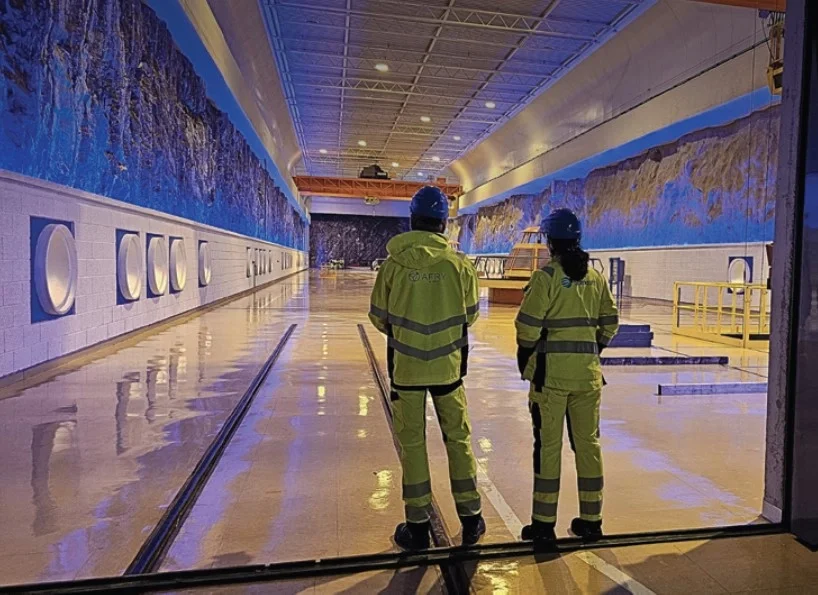
Norway’s Statkraft has contracted AFRY to conduct a feasibility study on optimising the operation of Norway’s largest pumped storage power plant in Saurdal. The study aims to double the plant’s capacity to store surplus renewable energy, enhancing consistent energy supply during peak demand periods.
The Saurdal power plant is one of the largest hydropower plants in Norway with a total capacity of 640MW, and an annual generation of approximately 1400GWh. AFRY’s study will assess the feasibility of converting the existing Francis turbines into pump turbines, enabling the plant to pump water back into the reservoirs during periods of surplus electricity on the grid. This would effectively transform the system into a large-scale energy storage solution, ensuring predictable energy availability during peak demand periods.
“Norway has outstanding hydropower resources. We are proud to contribute our expertise and advanced technology insights gained from similar projects in other markets to enhance the efficiency and reliability of the Saurdal pumped storage plant” says Ernst Zeller, Acting Head of Hydropower at AFRY.
German construction
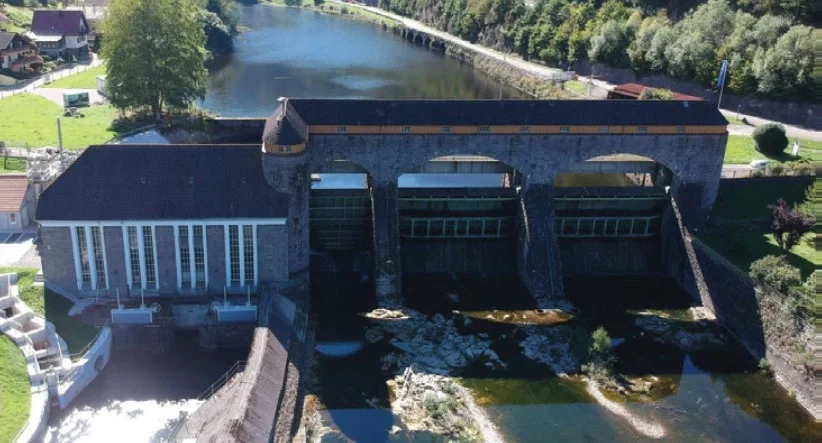
Construction at the Rudolf Fettweis plant in the Murg Valley has reached a key milestone with the completion of the crane runway beams. The upgrade, led by PORR Tunnelbau for EnBW Energie Baden- Württemberg AG, is part of the plant’s transformation into a pumped storage power facility, scheduled for completion in 2027.
In mid-February, the construction team successfully lifted the crane into position, enabling the next phase of the project to proceed. Tunnel work within the cavern resumed at the end of February.
Meanwhile, excavation on the Schwarzenbach access tunnel began in early February. This tunnel will connect the surge tank to the shaft head cavern. Raise-boring work, scheduled for summer 2025, will create a circular shaft drilled from bottom to top along a pilot bore. This work is essential for further construction phases.
Indian projects
Over in India, AFRY has been selected to provide detailed design engineering for Greenko’s 1800MW Shahpur pumped storage hydropower project in Rajasthan. AFRY’s responsibilities include detailed design work, construction supervision, and on-site engineering support through a resident engineer.
“This is a landmark moment for the renewable energy development in the region, and we are proud to be confirmed as Greenko’s trusted partner for this new project – a testament to our team’s expertise and dedication in accelerating the energy transition, demonstrated in previous collaborations,” said Sai Seela, Managing Director of AFRY India.
Greenko previously developed the Pinnapuram project, one of the world’s largest integrated renewable energy storage systems, featuring solar, wind, and pumped hydro elements. AFRY served as the principal design consultant for that pumped storage plant as well.
Another recent major development in the country is the commissioning by GE Vernova Inc. of the first of four 250MW variable speed units at the Tehri Pumped Storage Hydropower Plant in Uttarakhand. The project is part of the Tehri Hydropower Complex operated by THDC India Limited.
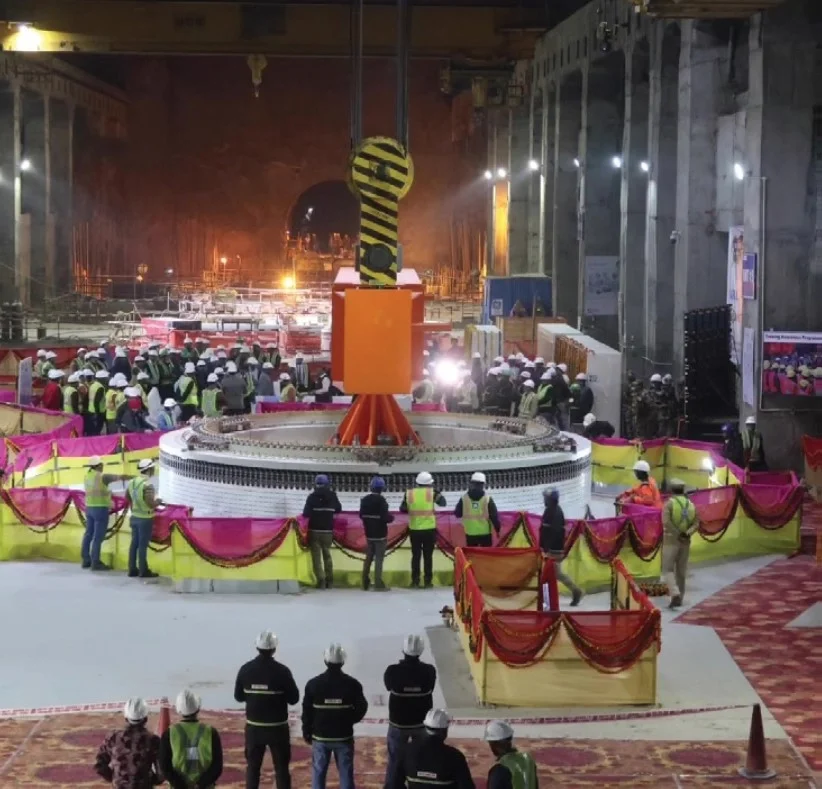
Once all four units are operational, the complex will reach a total capacity of 2.4GW, making it the largest hydropower facility in the country. The expanded reservoir is also expected to support the region with irrigation and drinking water.
“With this project, Tehri will become India’s first power plant to use variable speed pumped storage technology and the country’s most modern hydropower station. With fast transition between the turbine and pump operation, the four new units are expected to enable power control, leading to significantly improved grid flexibility. These are all crucial capabilities as more renewables are integrated into the country’s energy mix,” said Frederic Ribieras, CEO of GE Vernova’s hydropower business.
GE Vernova is providing a complete “water to wire” solution for the Tehri project, including hydropower generation equipment, power electronics, and controls. The company is supplying four variable speed doubly fed induction motor-generators and pump turbines, integrated with converters and control systems.
This article first appeared in International Water Power magazine.


