


The Morgan Offshore Wind Project (Morgan) is a consented offshore wind farm in the Irish Sea being developed by a joint venture between JERA Nex bp and Energie Baden-Württemberg (EnBW).
With an expected capacity of around 1.5GW, Morgan is positioned to become a key component of the UK’s Round 4 offshore wind leasing programme, helping deliver the government’s target of 50GW of offshore wind by 2030.

In August 2025, the Secretary of State for Energy Security and Net Zero granted a Development Consent Order (DCO) for Morgan’s generation assets, marking a significant regulatory milestone for the scheme.
Classified as a Nationally Significant Infrastructure Project under the Planning Act 2008, Morgan has now cleared the six-month examination process and is moving towards pre-construction activities, including engineering design, port readiness, and supply chain mobilisation.
Project Location
Morgan is located in the Irish Sea, approximately 37km off the north-west coast of England and 22km from the Isle of Man. Its array area lies in waters used by shipping and fishing interests, close to established ferry routes linking Liverpool, Heysham, Belfast and Douglas.
Onshore, the project will connect to National Grid’s network at Penwortham substation in Lancashire. This will be achieved through a coordinated transmission solution developed jointly with the neighbouring Morecambe Offshore Windfarm, also owned by the same joint venture.
The approach reduces landfall impacts and enables the shared use of infrastructure for offshore export cables and onshore substations.
Ownership and Financing
Morgan Offshore Wind Limited is the project company for the scheme. It is jointly owned by JERA Nex bp and EnBW, who also co-own the adjacent Mona project in the Irish Sea.
While the final investment decision (FID) has yet to be announced, capital requirements are likely to be in the multi-billion-pound range, reflecting the scale of turbine procurement, foundation fabrication, transmission infrastructure and port upgrades.
Financing is expected to combine equity from the joint venture partners with debt raised through project finance once offtake arrangements are secured.
Morgan Offshore Wind Project Capacity and Infrastructure
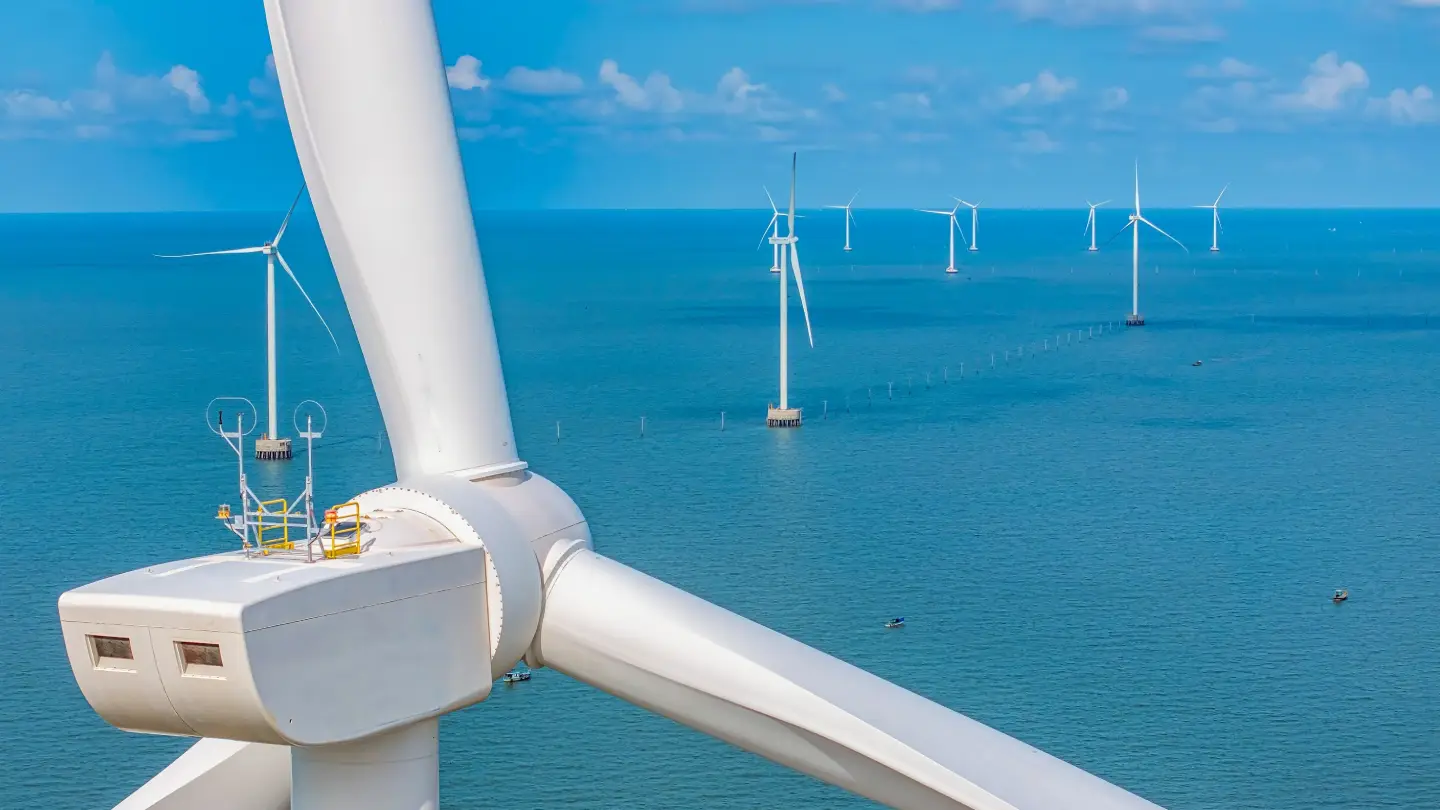
The project is consented for up to 96 three-bladed wind turbines with a maximum tip height of 364m above Lowest Astronomical Tide and rotor diameters between 250m and 320m. Turbine spacing has been set at a minimum of 1,400m in both directions to address wake efficiency, fisheries access, and navigational safety.
Electrical infrastructure includes around 390km of inter-array cables and up to three interconnectors totalling 60km. These will typically be buried at depths of 1-2m, with additional protection applied where burial is unfeasible.
Up to four offshore substation platforms will house step-up transformers, switchgear, and secondary systems, with provision for helicopter access.
Export to shore will be via the coordinated Transmission Assets project, which also includes a Morgan offshore booster station and two new onshore substations in Lancashire.
Development Timeline
A statutory consultation for Morgan was held in mid-2023, followed by the submission of the DCO application in April 2024. The Planning Inspectorate accepted the application in May 2024, and the six-month examination concluded in March 2025. A recommendation was issued in May 2025, with consent confirmed in August 2025.
Construction is expected to begin in 2026-27, subject to financing and contracting milestones. Grid connection is targeted for 2029, enabling full operations by 2030 in line with national offshore wind build-out schedules.
Technology and Construction
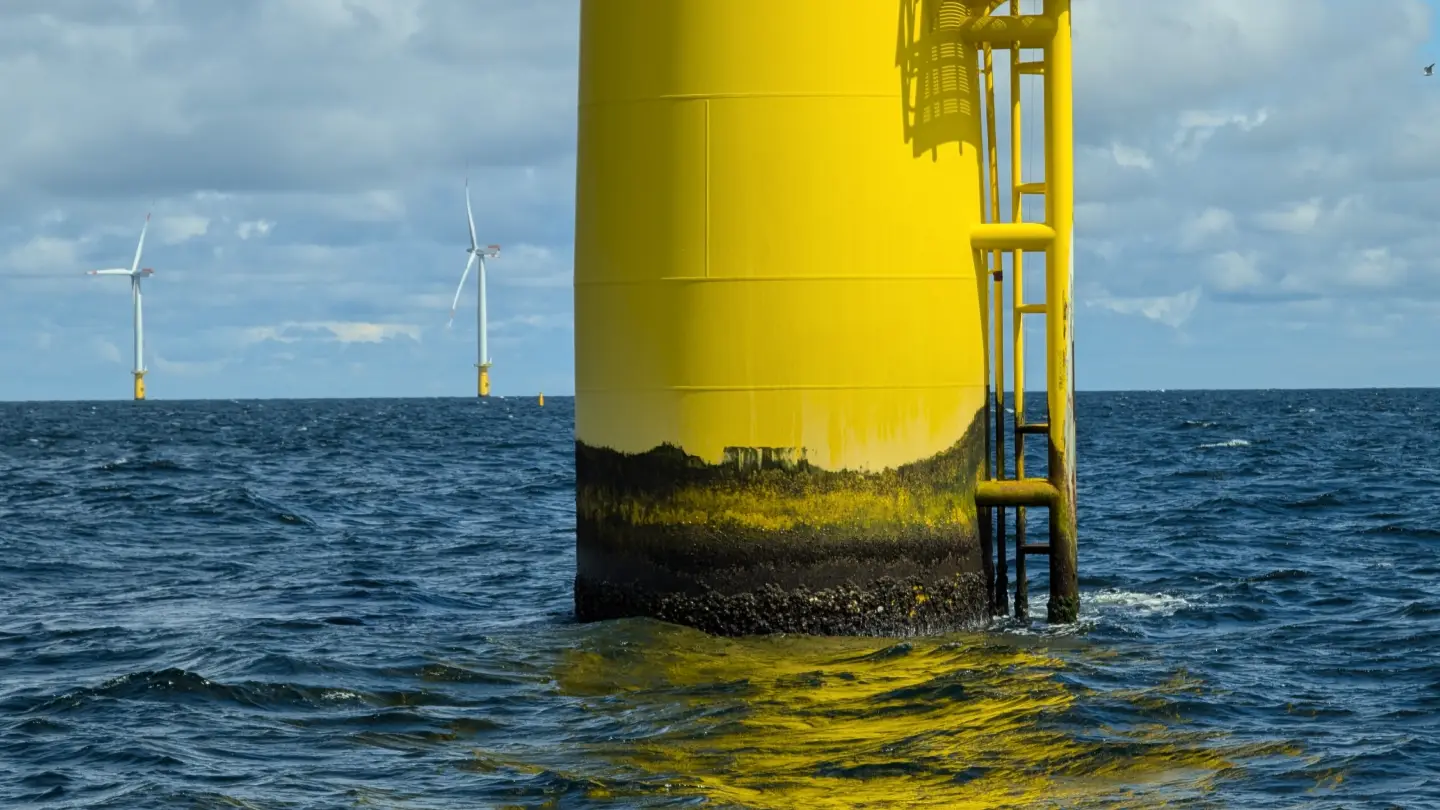
Morgan’s turbines will be among the largest deployed in UK waters, capable of single-unit generation of 15-20MW. Foundations will likely be monopiles, though other technologies remain under consideration pending detailed geotechnical surveys.
Construction will follow standard offshore sequencing: seabed preparation, foundation installation, turbine tower and nacelle erection, rotor assembly, and electrical integration. Offshore substations and export cabling will be installed in parallel. Heavy-lift installation vessels and cable-laying vessels will be contracted for the works, supported by port staging and local marine logistics.
Environmental Mitigation
The Environmental Impact Assessment identified potential impacts on marine mammals, seabirds, fisheries and navigation.
Mitigation measures include turbine spacing for vessel transit, seasonal construction restrictions, and noise abatement technologies such as bubble curtains during piling.
Cable burial depths are specified to minimise fishing gear interactions, with ongoing liaison groups established to maintain dialogue with the fisheries sector.
Navigation risk assessments were undertaken with the Maritime and Coastguard Agency, leading to refinements in turbine layout. The project has also committed to environmental monitoring programmes during both construction and operation.
Grid Integration
Morgan’s grid connection strategy is closely linked to the Morecambe Offshore Windfarm through a coordinated transmission solution. Export cables will run from the offshore substations to a Morgan offshore booster station, before making landfall in Lancashire.
Buried onshore cables will then connect to two new substations, which will feed into National Grid’s Penwortham substation.
This coordinated model reduces duplication, lowers overall costs, and minimises cumulative environmental impacts. It also reflects government policy encouraging more integrated offshore transmission development.
Ports Strategy
The project developers are working with ports across North West England and North Wales to assess opportunities for component marshalling, turbine assembly, and long-term operations and maintenance (O&M).
Larger ports are expected to handle construction logistics, including foundation staging and turbine pre-assembly, while regional ports closer to the site are candidates for O&M bases. Pre-construction efforts include port readiness assessments and upgrades, enabling facilities to manage ultra-large turbine components and specialist vessels.
