
There has been a surge in innovation activity targeting next generation battery technology with the aim of reducing capital costs for battery energy storage systems and improving their performance. With improved performance, it is hoped that they can be used for both short duration (SDES) and long duration (LDES) applications in the future.
We have seen some notable advances in sodium-ion battery technology recently, some of them resulting from work conducted over the past decade by Faradion. With sodiumion technology offering similar performance to lithium-ion, at a lower cost and often with improved cold performance relative to lithium-ion systems, there is huge potential for this technology and the market for sodiumion is expected to grow significantly in the future. However, sodium-ion batteries have lower energy densities than their lithium-ion counterparts, and so current research has focused primarily on remedying this weakness.
Patent protection has recently been sought by research scientists in China (CN111994890A), the invention is a new sodium vanadium phosphate cathode material and a method for producing it. The material has been shown to enhance the conductivity, capacity, and cycling stability of sodium-ion batteries, which could make them viable for a wider range of static energy storage applications in the future.
Other possible alternatives to Li-ion batteries for energy storage applications include redox-flow batteries and metal-air batteries.
Redox-flow batteries have a long history, with the first patent filing relating to this technology appearing as early as 1880. They were also trialled in electric vehicles as early as the 1970s. Redox-flow batteries operate by storing energy in electrolyte solutions that are pumped through the cell stack to store or release energy.
Power is determined by the surface area of the electrodes, and energy by the size of the tanks that store the electrolyte. This, combined with a huge range of available chemistries, provide for a highly flexible technology that can be tailored for the specific application.
Although suffering from low energy and power densities, as a result of the potentially large volumes of electrolyte needed, redox flow batteries are long lasting, making them well suited to LDES applications.
UK-based Invinity Energy Systems is a leader in this field, with a carbon-based bipolar plate (patent pending as GB2610372A), which is less susceptible to corrosion and mechanical damage. Invinity has installations at the Energy Superhub in Oxford, UK, where it provides battery load shifting, and Chappice Lake, Alberta, where it works with a solar power grid. Metal-air batteries combine a metal anode with oxygen taken from ambient air as the cathode. Current technology offers the hope of low costs and design simplicity, but energy efficiencies and cell lifetimes remain low. Zinc-air batteries are commonly used in hearing aids, and can provide capacities similar to AA alkaline batteries, although they have a lifetime of only a few weeks.
Aluminium-air batteries have been found to offer good energy densities, but until now costs have been prohibitive. Similarly, lithiumair systems are under consideration, but many challenges remain to be overcome, and the integration of lithium brings with it the supply chain concerns of the more developed lithium technologies.
Of most interest in the LDES sector could be iron-air technologies. Iron-air batteries are theoretically inexpensive, relying on iron oxide (rust) as the key component. Iron-air batteries would typically be hybrid fuel cell systems, and show potential, but many operational obstacles remain to be overcome.
Regardless of the electrochemical chemistries employed, it is thought that battery systems alone won’t be able to meet growing energy storage requirements in the future. As well as having complex supply chains and being reliant on rare earth metals in high demand, existing Li-ion batteries primarily provide short-term storage, and even the alternative chemistries which have reached the market are a number of years from being widely available.
To take the example of the UK, the National Energy System Operator (NESO) and National Infrastructure Commission estimate that 25 TWh of LDES twill be needed to support the electricity grid by 2050 – so where is it going to come from?
To complement BESS and to boost LDES capacity, one potential solution is thermal energy storage. Sensible heat storage (SHS) techniques use high heat capacity materials for longer term storage of heat, employing either directly generated heat or electrical energy from other sources converted to heat for storage.
For example, there is interest in ‘molten salts’ for storing heat energy for several weeks or even months. Innovators at the Xi’An Thermal Power Research Institute in China have recently filed an international patent application for a molten salt storage apparatus – WO2023193487A1 – offering extensible thermal energy storage.
Another innovative form of TES utilises bricks of high heat capacity material, which can store excess renewable energy as heat for longer and more cheaply than Li-ion battery based chemical energy storage. Many systems use bricks made from readily available materials, such as graphite, aluminium, clay and iron ore, which are cheaper and easier to source than those required for Li-ion batteries. Recent advances aim to facilitate effective conversion of stored heat energy to usable electrical energy via arrays of thermophotovoltaic cells to convert infrared from TES bricks.
A technology that could complement both TES and BESS systems in the future is superconducting magnetic energy storage (SMES). SMES systems have extremely high energy conversion efficiencies, can deliver bursts of high power quickly, and offer the ability to store energy indefinitely as electric current induced in a superconducting coil. Although SMES systems are primarily used in power quality applications due to the high costs associated with keeping the superconducting coils below their critical temperature, the advent of high temperature superconducting materials is opening up the possibility of larger scale, efficient energy storage.
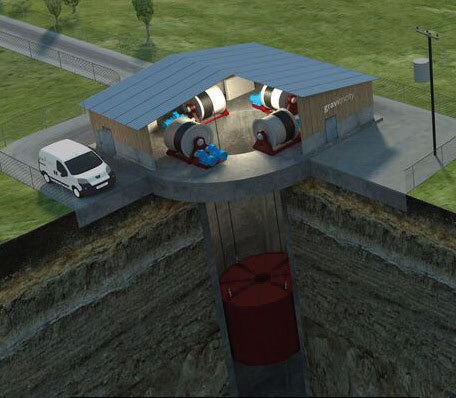
Converting electrical energy to gravitational potential energy for storage is a well-established principle in the form of pumped hydropower. This same principle is now also being put into practice using weighted electric winch systems housed in vertical shafts (for example former mine shafts). At times of excess supply, electrical energy is used to raise a weight via an electric motor. When the energy is needed in the grid, the weight is lowered, driving a generator. This technology has the advantages of being relatively cheap and very long-term.
Backed by crowdfunding, UK-based Gravitricity has recently secured patent protection in the US for its efficient, gravity based energy storage system, US11965490B2, which offers a large storage capacity per shaft and enables a continuous flow of power input and output.
Iron and salt: a winning combination for long-duration storage?
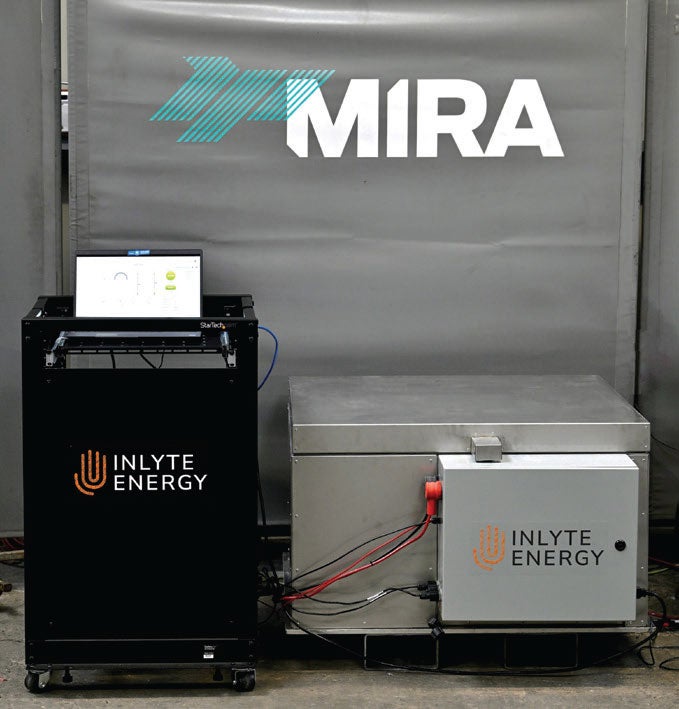
Inlyte Energy has announced a major performance milestone for its innovative iron– sodium battery technology, achieving over 80% round-trip efficiency in third-party cycle testing, including auxiliaries – which the company describes as a “significant breakthrough for long-duration energy storage.”
Southern Company research and development is expected to deploy the first integrated system in Q4 2025, seen as a critical step towards broader commercial adoption. This will be the first utility demo of the technology, with a Southern Company team preparing to operate an Inlyte iron-sodium battery installation located near Birmingham, Ala. Evaluation will last for at least one year and will be a critical phase of product validation. Results will be shared across a broad network of utilities, in collaboration with EPRI.
The third-party cycle testing results were independently validated by HORIBA MIRA. The performance milestone “positions Inlyte’s battery as a highly efficient, domestically sourced alternative to lithium ion systems for stationary energy storage”, the company says.
The tests, conducted at HORIBA MIRA’s UK facilities, evaluated performance under realistic cycling and abuse scenarios. Results confirmed the battery’s “exceptional performance, safety, durability, and simplicity,” according to Inlyte Eenrgy. The results build upon Inlyte’s iron–sodium cell-level performance findings, which demonstrated stable performance of 90% efficiency and no capacity loss after more than 700 cycles. The new battery-level results demonstrate realised performance from the integration of 100 iron–sodium cells and associated auxiliary control systems.
In support of scaling US manufacturing, Inlyte recently announced a strategic partnership with HORIEN Salt Battery Solutions, the world’s largest producer of sodium metal chloride batteries. This collaboration accelerates domestic production, with commercial deliveries targeted for 2026.
Inlyte Energy delivers breakthrough iron sodium battery technology enabling safe, sustainable, and domestically produced long-duration energy storage. “With simple ingredients — iron and salt — and innovative design,” Inlyte says it is “reshaping energy storage.”
The future is grid forming, says Huawei
Grid forming is a central feature of Huawei’s energy storage offerings and was emphasised by the company in presentations at Intersolar Europe 2025, Munich, in May with the theme “Smart PV & ESS: powering a grid forming future.”
Steven Zhou, President of Smart PV & ESS Product Line, Huawei Digital Power, described the company’s strategic goal of integrating “4T” technologies (bit, watt, heat, and battery) to provide the energy infrastructure for new power systems and introduced key Huawei “value propositions”, including “all-scenario grid forming”, with grid forming technology “applied to power generation, transmission, distribution, and consumption to ensure the long-term stability of new power systems.”
Steve Zheng, President of Smart ESS Business, Huawei Digital Power, presented Huawei’s “next-generation all-scenario Smart String Grid Forming ESS Platform”, which is designed to address challenges in renewables grid integration and ESS safety.
Huawei believes the platform “defines the gold standard of grid-forming capabilities”, able to adapt to any BESS state of charge status and any grid short circuit ratio.
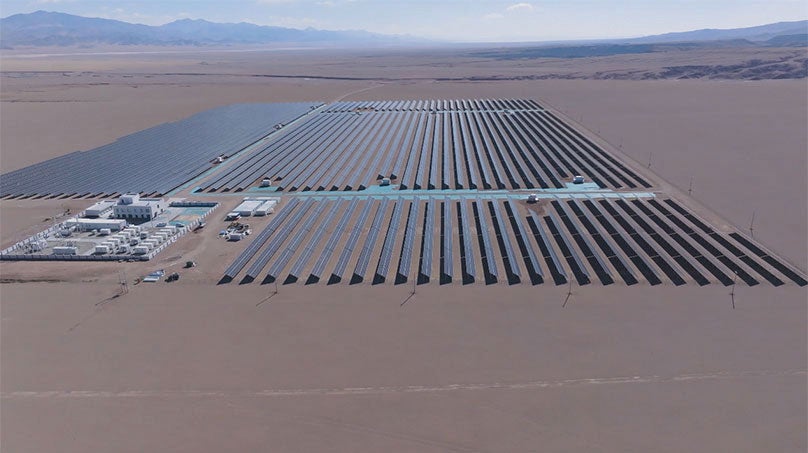
The technology has already been applied to a 1.3 GWh ESS and 400 MW PV facility in Saudi Arabia (part of the Red Sea development). The project is said to be the world’s largest PV+ESS microgrid, powering consumers with 100% renewable energy. The microgrid has been running stably for more than 18 months, Huawei reports.
In China, a 30 MW PV + 6 MW/24 MWh ESS project in Ngari is employing Huawei’s “Smart PV+ESS Solution”. This “fully gridforming power plant” is located at high altitude (about 4600 m) with extremely low temperatures and weak grid conditions.
EASE guidelines on safety
The recently launched EASE (European Association for Storage of Energy) Guidelines on safety best practices for battery energy storage systems are designed to support the safe deployment of outdoor, utility-scale lithium-ion (Li-ion) BESS across Europe.
As the EU strives for climate neutrality by 2050, the need for safe and reliable energy storage has grown significantly. In 2024, Europe had some 35 GW (cumulative) of installed electrochemical storage capacity, reflecting the rapid expansion of battery energy storage systems and their crucial role in the global energy transition. Ensuring these systems meet the highest safety standards in design, development, installation, and maintenance is essential to support this growth.
The EU Batteries Regulation (Regulation (EU) 2023/1542) requires that stationary BESS be safe during normal operation and use. In response to these requirements, the EASE document outlines safety guidelines specifically for outdoor, utility-scale lithium-ion BESS. It does not address other types of batteries (eg, redox flow batteries) which have distinct risk profiles. The focus is on systems with a maximum DC voltage of 1500 V or a maximum AC voltage of 1000 V and an energy storage capacity exceeding 20 kWh.
The guide, reviewed by EPRI (Electric Power Research Institute), highlights recognised industry best practices for demonstrating safety compliance, focusing on product safety (Chapter 2), site safety (Chapter 3), and personnel safety (Chapter 4).
Intensium® Flex aims for best-in-class safety
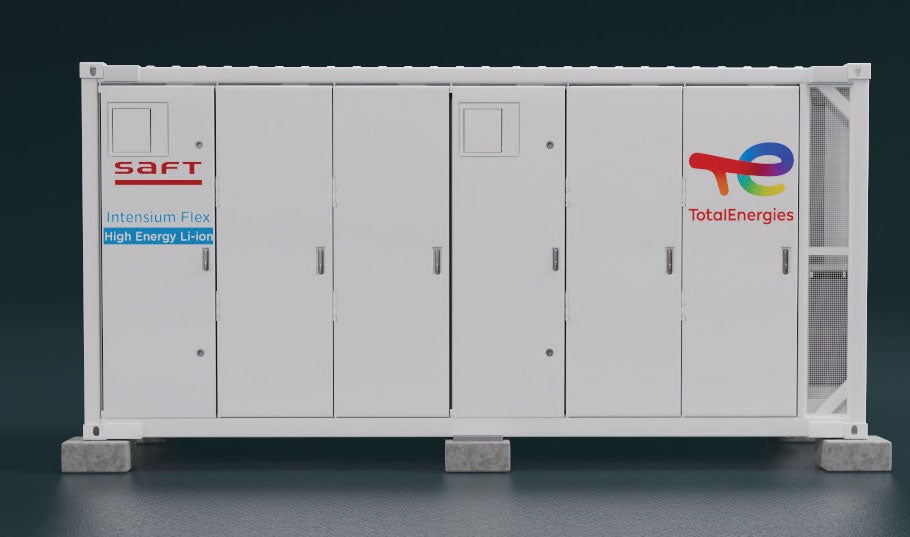
Saft, a subsidiary of TotalEnergies, has extended its energy storage system (ESS) offering with the launch of Intensium® Flex (I-Flex). It provides compact building blocks rated at 3.4, 4.3 or 5.1 MWh for the creation of energy storge systems up to the GWh scale.
Based on Lithium Iron Phosphate (LFP) cells, I-Flex is a high energy, liquid-cooled, fully integrated system engineered to ensure high levels of safety and operational reliability under intense use conditions.
Saft’s Intensium Flex battery containers can be connected in parallel, in configurations providing from 2 to 8 hours storage. Thermal insulation allows back-to-back and side-by-side installation, significantly reducing footprint.
The current DC version is compatible with multiple power conversion systems, while the future AC version will integrate DC to AC conversion within the same enclosure, further optimising footprint and simplifying on-site installation and commissioning.
A key feature of Intensium Flex is its enhanced thermal management that enables a 300% daily energy throughput even with the highly compact assembly of the battery modules. This is made possible by the efficient cooling system and the battery management module, together with a powerful, integrated heat exchanger cooling circuit.
The focus on maintaining temperature homogeneity across the battery modules is critical to ensure system performance and a long service life.
After a decade of field experience and in the light of the challenges posed by ever-increasing energy density and new standards, I-Flex sees implementation of a new holistic safety concept designed to prevent fire, toxic gas emissions and explosions.
It is factory-assembled, tested and certified ready for delivery to site as a plug and play energy storage system that ensures bestin- class safety, in line with future NFPA 8551 requirements.
Second mtu EnergyPack for Zeewolde
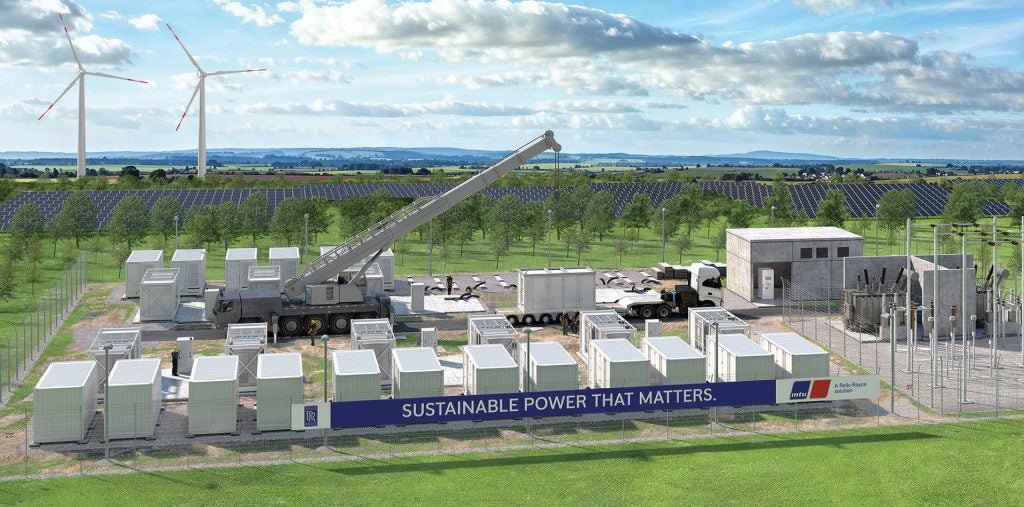
Rolls-Royce is supplying a second mtu EnergyPack large scale battery energy storage system to Zeewolde in the Netherlands. Starting in 2026, the new mtu EnergyPack will help increase grid stability by storing electricity generated by the local wind farm and feeding it back into the grid as needed.
Energy infrastructure developer Eleqtis B.V. has commissioned Rolls-Royce to supply, install and maintain the system, which will have a power output of 35.1 MW and a capacity of 144.4 MWh. The contract also includes a ten-year-long term service agreement, which offers “extensive guarantees for the customer,” says Rolls-Royce. For example, the system’s capacity will be guaranteed throughout the entire term.
The facility is designed for the provision of grid-critical services such as frequency regulation, peak shaving and short-term trading.
Eleqtis focuses on creating flexible, futureproof power systems, including large-scale battery storage, grid connections, and renewable energy assets.
It will work with Catalise Energy, which will deploy its Revenue Guarantee Model, part of a comprehensive suite of services that ensure revenue certainty for developers, investors, and financiers in the global energy storage market.
In Autumn 2025, the first mtu EnergyPack at Zeewolde, Battery Park Zeewolde (BPZ), will go into operation.
Rolls-Royce mtu EnergyPacks employ nickel manganese cobalt (NMC) lithium ion batteries.
This article first appeared in Modern Power Systems magazine.


